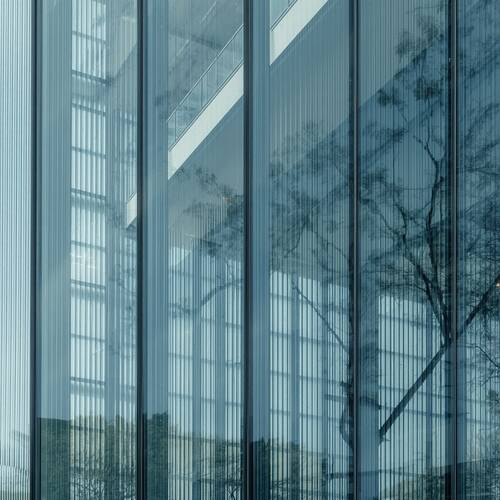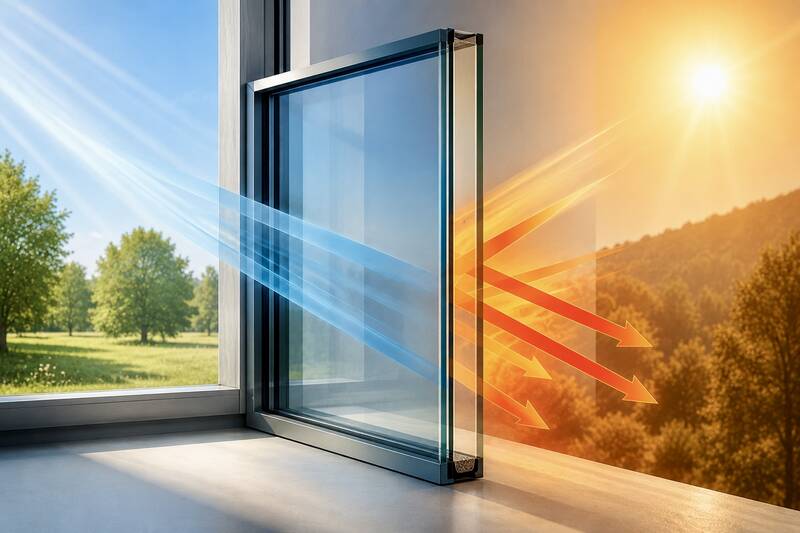
Large glass surfaces have become an essential feature of contemporary architecture. They create bright interiors, provide uninterrupted views and establish a seamless connection between indoor and outdoor spaces. While these transparent façades offer significant architectural benefits, they also pose a serious threat to birds. Every year, countless birds collide with windows, façades and glazed structures because they are unable to recognize glass as a physical barrier.
To reduce this risk, many homeowners, architects and building owners install bird silhouette stickers or decorative decals on their glazing. Although these measures are widespread and often recommended, scientific research has shown that they rarely provide reliable protection. Anyone aiming to reduce bird collisions effectively should therefore rely on proven bird-friendly glazing solutions rather than temporary visual markers.
Why Birds Do Not Recognize Glass
Birds perceive their surroundings very differently from humans. While people immediately recognize glass as a solid surface, birds often interpret it as open air. Transparent glazing allows an unobstructed view of vegetation, trees or the sky, while reflective glass mirrors the surrounding landscape so realistically that birds mistake it for a safe flight path.
The collision risk is particularly high in situations involving:
- Large glazed façades
- Winter gardens and conservatories
- Opposing windows creating a visual fly-through
- Corner glazing
- Highly reflective glass surfaces
- Glass balustrades and overhead glazing
The danger increases further when birds can see another window or an opening behind the glass, creating the illusion of an uninterrupted flight corridor. Illuminated interiors during the evening also attract birds and increase the likelihood of collisions. On larger buildings, exterior lighting at night may further contribute to bird strikes.
Reflections play an equally important role. The stronger the glass reflects vegetation, trees or water features that attract birds, the greater the probability of an impact.
Why Bird Silhouettes and Stickers Do Not Work
For decades, black bird-of-prey silhouettes were considered a simple solution for preventing bird collisions. Today, numerous scientific studies demonstrate that individual silhouettes or a handful of stickers do not provide effective protection.
The explanation is straightforward. Birds do not interpret individual stickers as a continuous obstacle. Instead, they simply perceive isolated dark shapes and continue flying through the large unmarked areas between them.
Even placing several silhouettes across a window changes very little. Birds continue to identify the remaining open spaces as safe passageways.
This is why experts refer to the so-called "hand rule." To be effective, the spacing between visible markings must generally be less than approximately 10 centimeters (about 4 inches). Individual bird silhouettes are far too widely spaced to satisfy this requirement and therefore fail to prevent most collisions.
What Actually Protects Birds
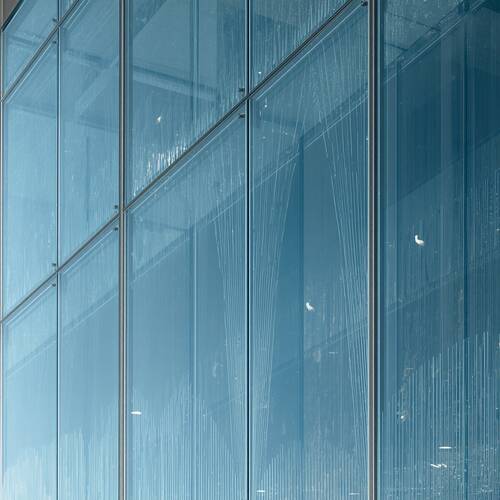
Effective bird protection is not achieved through isolated symbols but through glazing that birds can consistently recognize as a barrier. Whether the visible pattern consists of lines, dots or other geometric elements is less important than ensuring that the entire glass surface is visually structured.
Today, architects and planners can choose from several proven solutions, including:
- Ceramic frit patterns
- Acid-etched glass
- Decorative screen-printed glazing
- UV-reflective bird protection coatings
- Permanently integrated bird protection glass
For existing buildings, exterior films with dense line or dot patterns can also provide an effective retrofit solution.
Although these systems differ in appearance, they all pursue the same objective: making glass visible to birds without compromising the architectural quality of the building.
Comparison of Common Bird Protection Solutions
| System | Typical Application | Tested Effectiveness | Advantages | Limitations |
|---|---|---|---|---|
| Individual bird-of-prey silhouettes | Residential buildings, temporary applications | Scientifically shown to be ineffective | Low cost, easy to install | Large unprotected areas remain |
| Exterior films with line or dot patterns | Retrofit applications | More than 90% effective when densely applied | Cost-effective, flexible, wide range of designs | Exterior application required for long-term performance |
| Ceramic frit / screen-printed glass | New construction and renovations | Very high effectiveness | Permanent, weather-resistant, durable | Higher planning effort and investment |
| Acid-etched or patterned glass | Entrances and selected façades | Very high effectiveness | Additional privacy, permanent solution | Reduced transparency |
| Cords, screens or exterior blinds | Existing buildings | Moderate effectiveness | Affordable and easy to install | Affects appearance and visibility |
| ORNILUX® mikado | New construction and renovation | Scientifically tested, highly effective | UV-reflective, almost invisible, maintenance-free | Higher initial investment than retrofit films |
| ORNILUX® design dots / design lines | New construction and renovation | Scientifically verified | Permanent integrated markings, elegant appearance, compatible with insulating glass | Visible pattern must be incorporated into the architectural design |